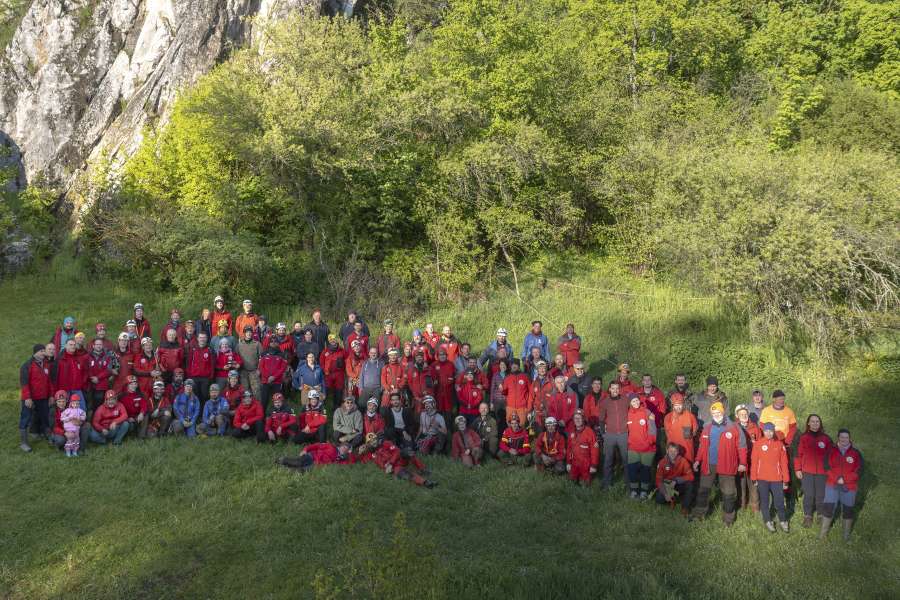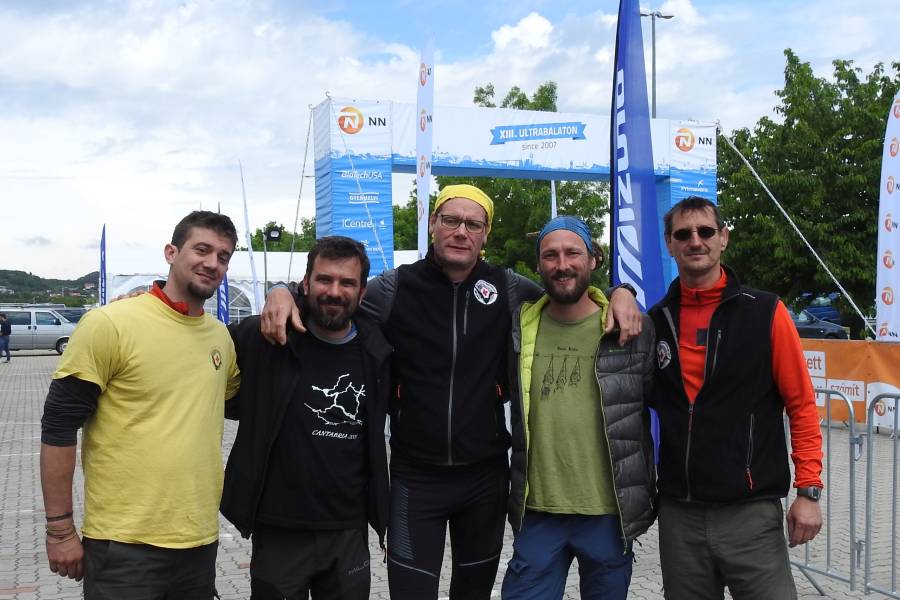
Between May 5 and 10, together with the Aggtelek National Park Directorate and within the framework of the ECRA (European Cave Rescue Association), we organized our international rescue exercise, “Stuck in Baradla – 2026.” Besides the Hungarian participants, 47 cave rescuers and cave rescue doctors from 17 countries attended the training. The whole event came together largely because cave rescuers seem capable of mobilizing an almost endless amount of volunteer work when the goal is worthwhile — and because the Aggtelek National Park Directorate has long been an exceptionally supportive partner, doing a great deal to ensure that the thousands of cavers visiting the region each year are backed by the strong safety net provided by the Hungarian Cave Rescue Service. Running partly in parallel with the international exercise, both in time and location, we also held our own national spring rescue training.
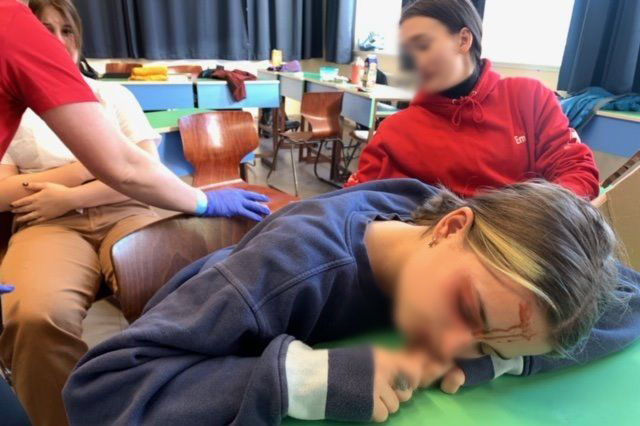
The central focus of the exercises was the treatment of severely injured patients. It means that we were concentrating on critically ill, unstable patients in isolated expedition-style cave environments. The cave rescue doctors demonstrated and shared the knowledge and experience they have gathered in treating life-threatening injuries underground. Fortunately, serious cave accidents are rare. As a result, cave rescue doctors only occasionally get the chance to test their skills in real-life situations. Very few people gain direct experience from such incidents, which makes the sharing of knowledge, dilemmas, and hard-earned lessons especially important.
During “Stuck in Baradla – 2026,” the doctors did not only practice medical care. To simulate the realities of prolonged cave rescues, they spent four days bivouacking in an underground camp inside the cave system. This allowed them to experience the distorted sense of time and the relentless 24-hour physical exposure that comes with extended underground operations.
For the non-medical cave rescuers, the focus was equally centered on severely injured patients. Their task was to create the safest possible conditions for transporting trauma-sensitive casualties to the surface, while also developing and practicing rescue systems that would allow the accompanying physician to remain within arm’s reach of an intubated and ventilated patient throughout the entire rescue — even while moving through rope systems.
The exercise became even more international when Saturday’s program reached the Styx branch of the Baradla cave system. Before the Schengen era, this passage was obstructed by a border gate. Today, only water-filled passages, sumps, and deep mud complicate the movement of injured patients there. The exercise concludes on Sunday with the sharing of experiences and the evaluation of lessons learned. We hope that the knowledge and practical experience gained during the training will become part of many rescuers’ professional toolkit — and we also hope that this accumulated expertise will only rarely be needed in real emergencies. But if another large-scale rescue requiring international cooperation does happen, the personal relationships and shared experiences built during exercises like this, will hopefully make cooperation between rescue teams from different countries far easier and more effective.
Photos: dr. Gergely Ambrus, Márton Kovács, Zoltán Tóth